
For anyone who hears about dry air and static electricity in January — and finds dark patches in a corner of the basement in August.
Humidity monitoring is the continuous measurement of how much water vapour there is in the air in a room. The most widely used unit is relative humidity (%RH): the water content of the air compared with the maximum the air can hold at the current temperature. In an ordinary office, 35–65 %RH is a sensible band. Below around 30% the air feels dry, and above around 70% the risk of condensation and mould rises noticeably. Humidity is the parameter that affects people and buildings alike — and the one that explains the most damage.
The word ‘relative’ is the whole point
The warmer the air is, the more water it can hold. That is why the same amount of water means completely different percentages at different temperatures, and it is exactly where winter’s dry air comes from.
Cold outdoor air holds very little water, even when it is saturated. Let it in and warm it to room temperature and the relative humidity drops — the air is the same, but its capacity to hold water has grown. It feels like dry eyes, a dry throat and sparks off the door handle, and it is not because anyone has removed water from the room.
The other direction is more dangerous. When warm, damp air meets a cold surface — an external wall behind a cupboard, a window frame, an uninsulated pipe run — the temperature falls locally and the relative humidity rises. Once the surface is colder than the dew point, water settles on it. The dew point is precisely the temperature at which the air is saturated, and it is calculated automatically from temperature and relative humidity. Together with absolute humidity (the actual amount of water in grams per cubic metre) these are the two derived figures that make discussions about damp precise: absolute humidity tells you whether water has genuinely been added, independently of the temperature.
Where humidity should sit
| Situation | Band | Why |
|---|---|---|
| Offices and similar rooms in use | 35–65 %RH green | Comfort; below 30% it feels dry, above 70% there is a risk of condensation |
| Basements and store rooms | Typically below 55 %RH | Mould risk rather than comfort |
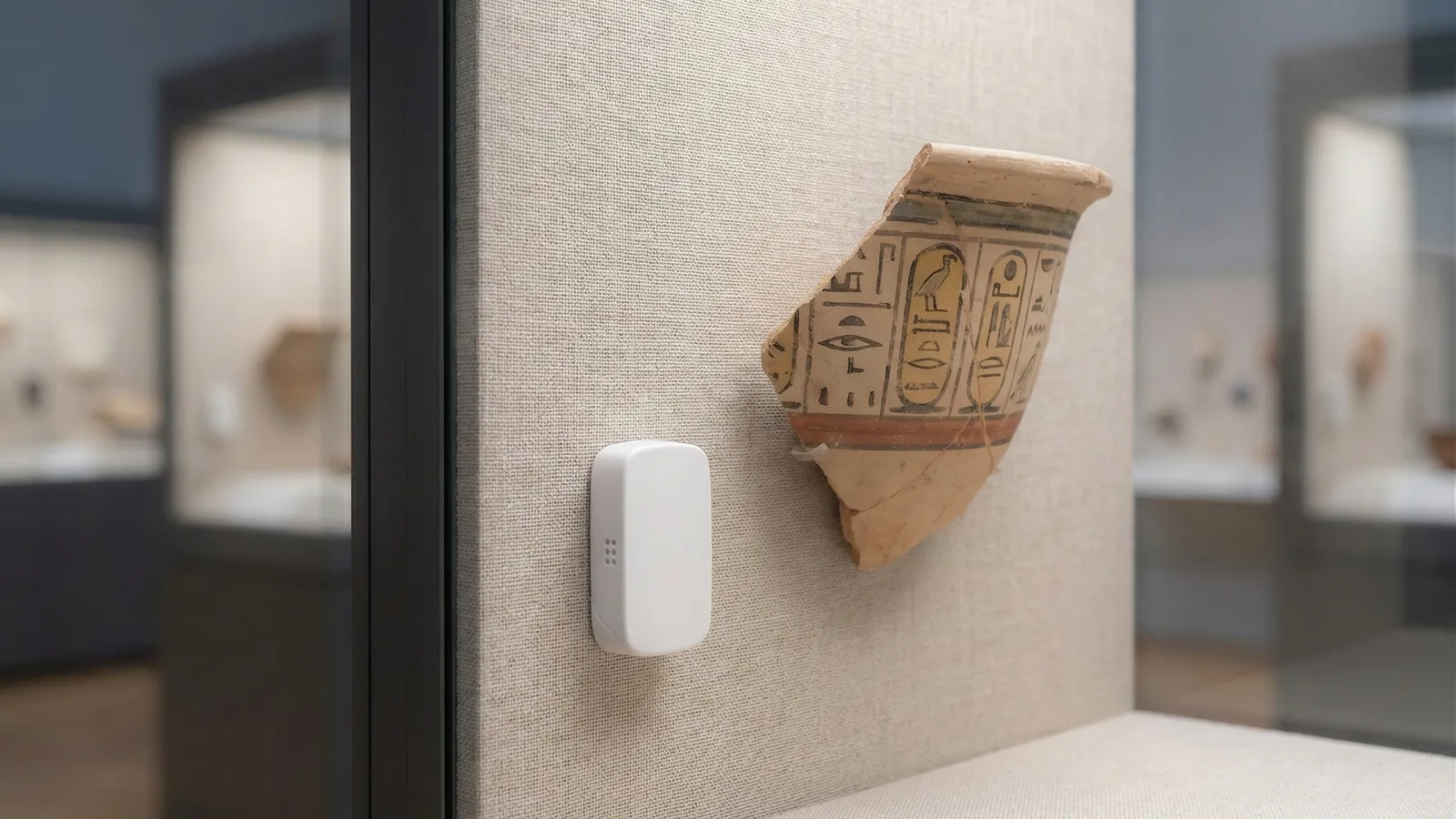
Note the large difference between people and materials. For people it is about the level. For objects made of wood, paper, canvas and textile it is at least as much about the fluctuations. The bands collections are held to are in preservation monitoring. A crawl space or an unheated loft also follows the outdoor climate all year round, and high humidity there in winter is to be expected. That is not a comfort problem, it is a mould question.
How to follow humidity
In the Indoor climate module of our solution RoomAlyzer Air, relative humidity sits alongside temperature and CO2 in the sensor list, and one click opens the quick chart. In the charts you can overlay humidity and temperature, and that is often where the connection becomes visible: humidity falls when the heating comes on and rises again as the room cools. Dew point and absolute humidity can be selected as parameters in the chart and in the CSV export, so you can separate a genuine moisture load from a pure temperature effect.
The limits come from the scenario the room has been assigned. An open-plan office, a nursery, an archive and a cold room each have their own band, and the system colours them green, amber and red accordingly — including when the scenario switches between summer and winter.
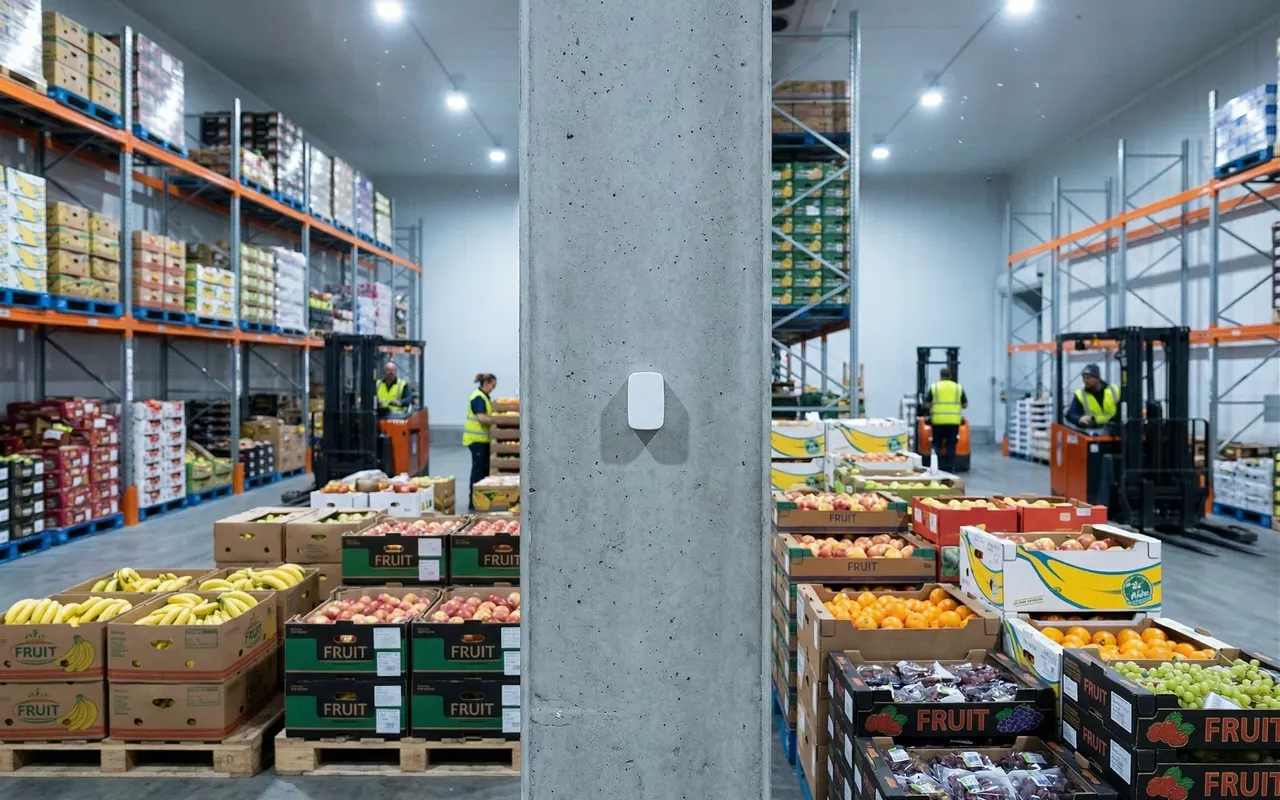
And because moisture damage develops slowly, notifications matter more here than for most other parameters. An alert on sustained high humidity in a store room arrives long before the patches on the wall.
When humidity becomes a mould risk
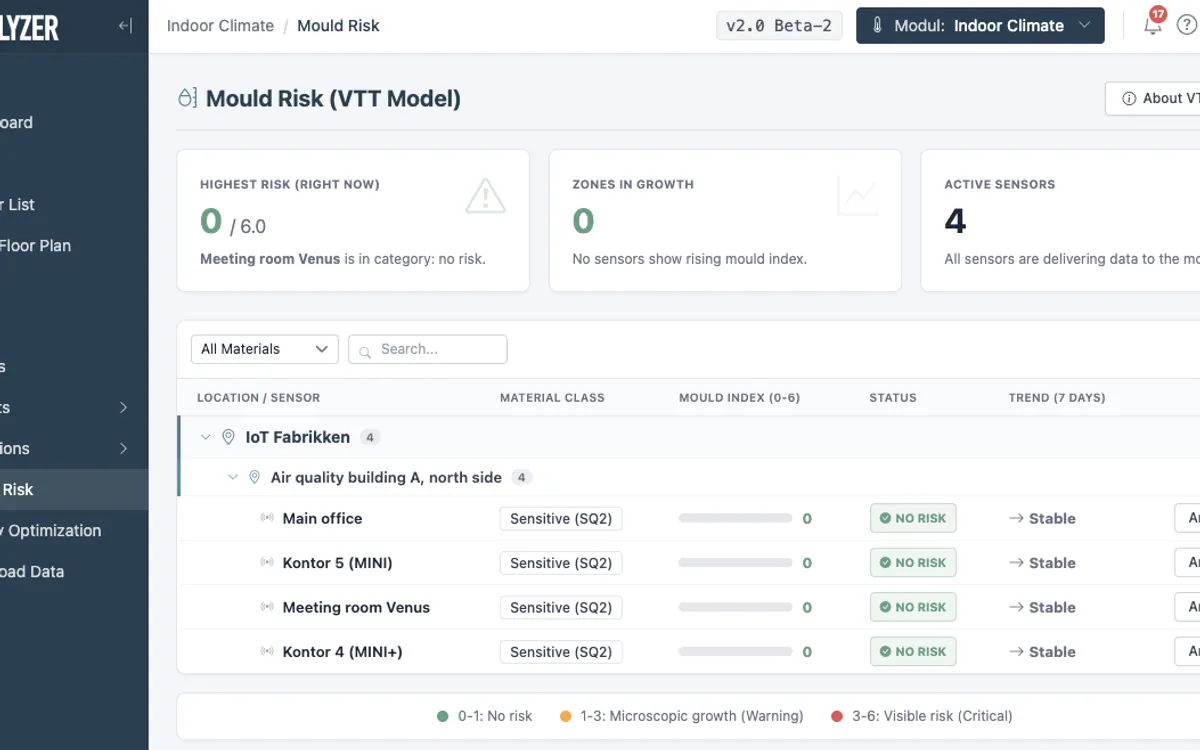
High humidity is not damage in itself. It is the condition that lets damage happen. How that is calculated over time is in mould risk under VTT.
If you have collections, historic buildings or archives, the level alone is not what you should be managing to. The analyses built on temperature and humidity are in preservation monitoring.
If you want to see how fluctuations are assessed against a room’s own historical climate, EN 15757 is explained here. If you need the risk model itself, mould risk under VTT is covered here.