
Unnecessary energy waste
Heating and cooling run whether rooms need it or not — and without proper data you are paying for comfort nobody feels.
Remote indoor climate monitoring that turns complaints into facts and saves energy

The challenges you know
Indoor climate monitoring gives you the data to answer a question every facility manager knows: is the complaint real, or is it a feeling? Someone is too warm, someone else is too cold, and the air feels "heavy" by mid-afternoon, but without data on temperature, humidity, and CO₂, you are left managing impressions, adjusting ventilation on guesswork, and defending decisions you cannot back up.
Heating and cooling run whether rooms need it or not — and without proper data you are paying for comfort nobody feels.
One side of the building is too warm while another is too cold. Without objective readings, facility teams cannot find the right balance between heating and cooling.
Facility managers, HVAC contractors and compliance teams work from different assumptions — and nobody shares the same picture of what the air is actually doing.
Conditions shift through the day and the season. Without continuous monitoring, unpredictable indoor climate stays a guessing game instead of something you can act on.
How RoomAlyzer solves it
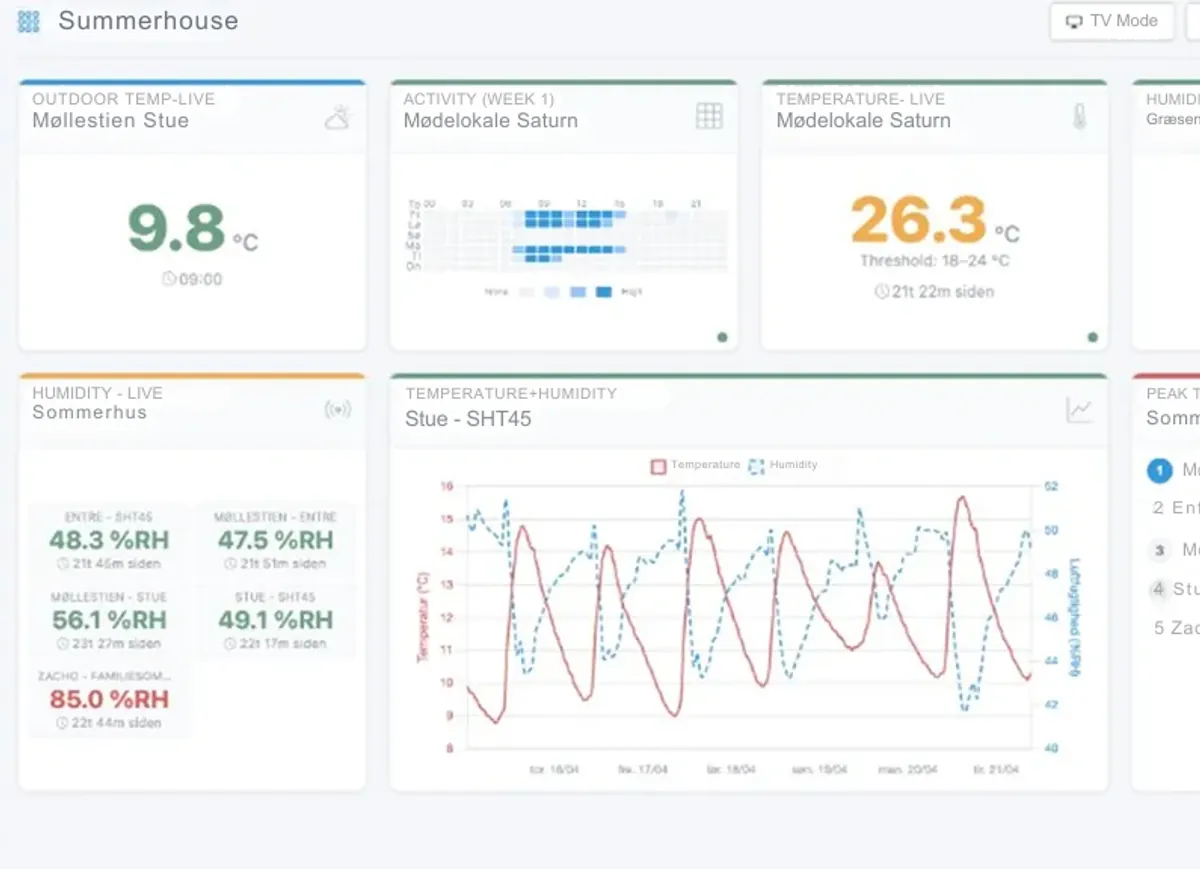
RoomAlyzer Indoor climate connects CO2, Humidity, and Mini+ sensors to clear dashboards, alarms, reports, predictions and recommendations — built for facility teams, compliance officers and building owners with compliance in mind. Start with what indoor climate is. Compare indoor climate sensors
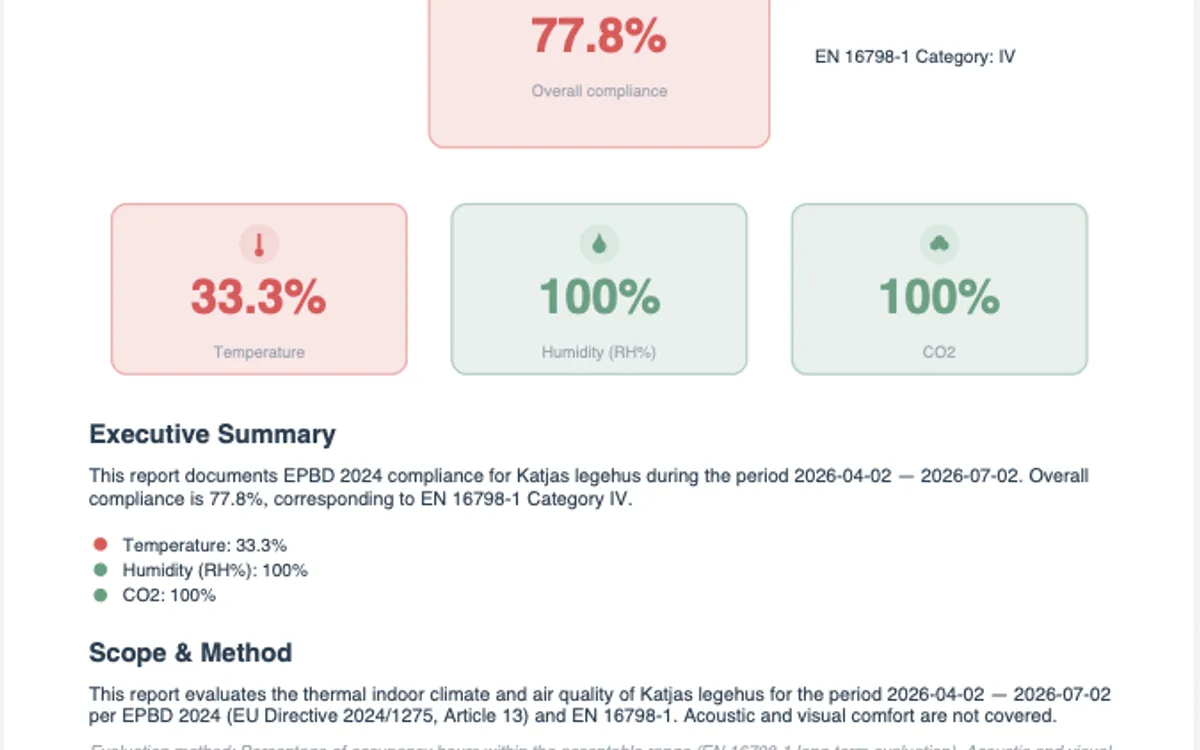
RoomAlyzer produces compliance documentation directly from live sensor data — no spreadsheets, no manual collection. For DGNB certification (SOC 1.1 / 1.2, EN 16798-1), a wizard walks you through period, working hours, sensors and thresholds, then generates a professional PDF with charts, statistics and floor-plan overlays. For buildings under EPBD 2024, create a full compliance report on demand with gap analysis, compliance percentages per parameter, an energy overview and rule-based recommendations.
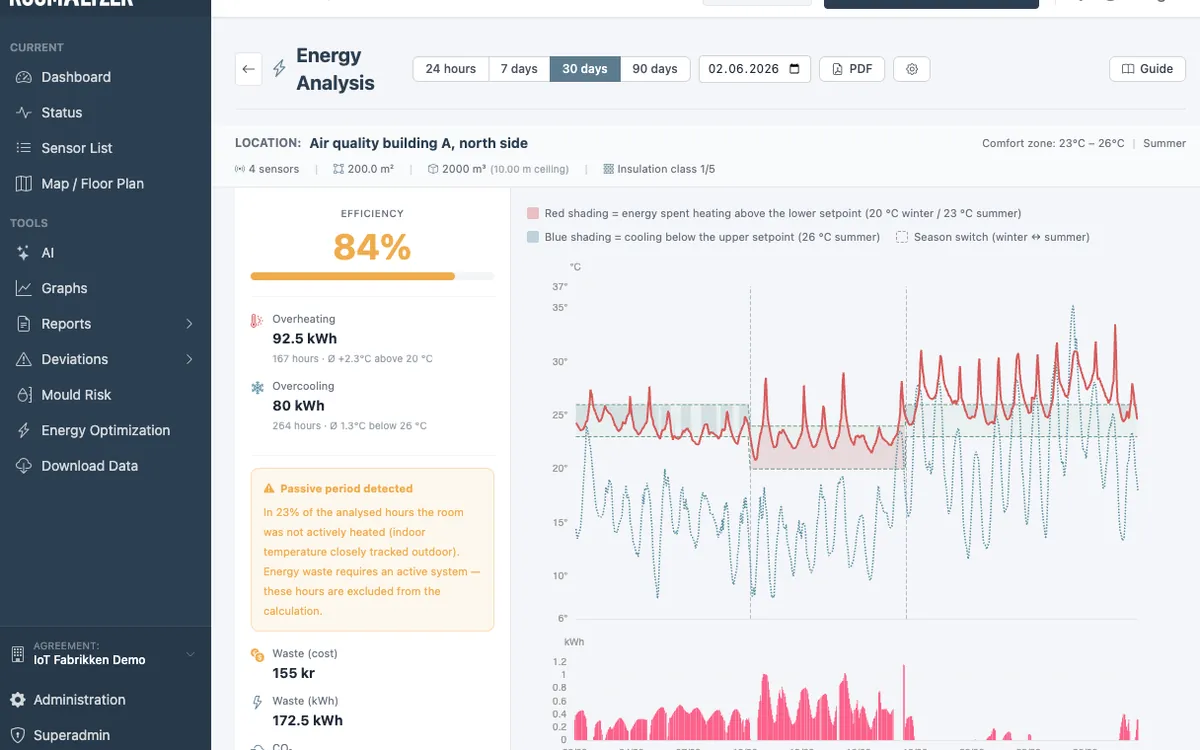
See how much energy your building wastes keeping rooms warmer or cooler than they need to be. The module compares indoor temperature against winter and summer setpoints and puts a clear figure on overheating and overcooling (in kWh, in cost and in CO₂) so you can see exactly where savings are hiding. An efficiency score sums up each location at a glance, passive periods are excluded so the numbers stay honest, and you get concrete, prioritised recommendations for any window from 24 hours to 90 days.
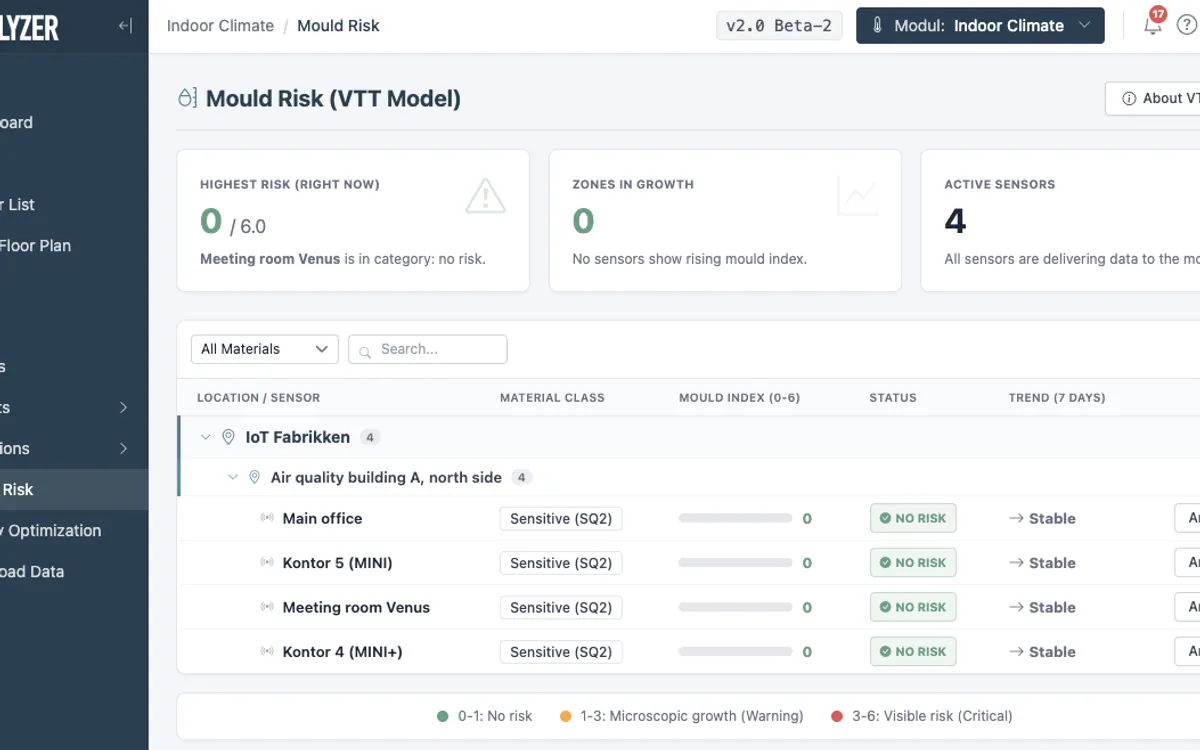
The Mould Risk module uses the recognised VTT model to turn temperature and humidity into a single mould index from 0 to 6 for every sensor — from no risk through early microscopic growth to visible, critical risk. Set each location's material sensitivity so the model reflects your actual building. A clear overview shows the highest risk right now, which zones are growing and how each one is trending, with plain-language advice before a small ventilation change becomes a costly repair.
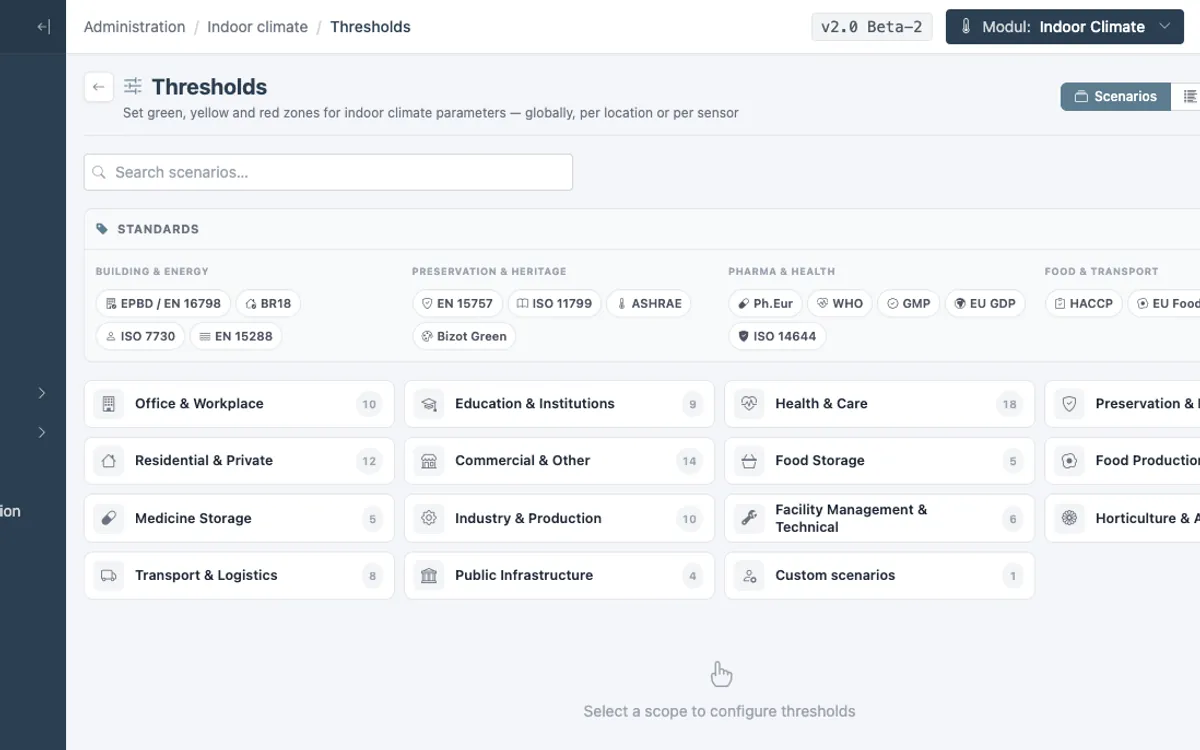
Thresholds are the green, yellow and red zones that define a good indoor climate for your building — and with scenarios you set them once and apply them globally, per location, or down to a single sensor. RoomAlyzer ships with ready-made scenarios built on recognised standards (from EPBD / EN 16798 for offices to EN 15757 for preservation and HACCP for food storage), grouped by sector so the right limits are only a click away.
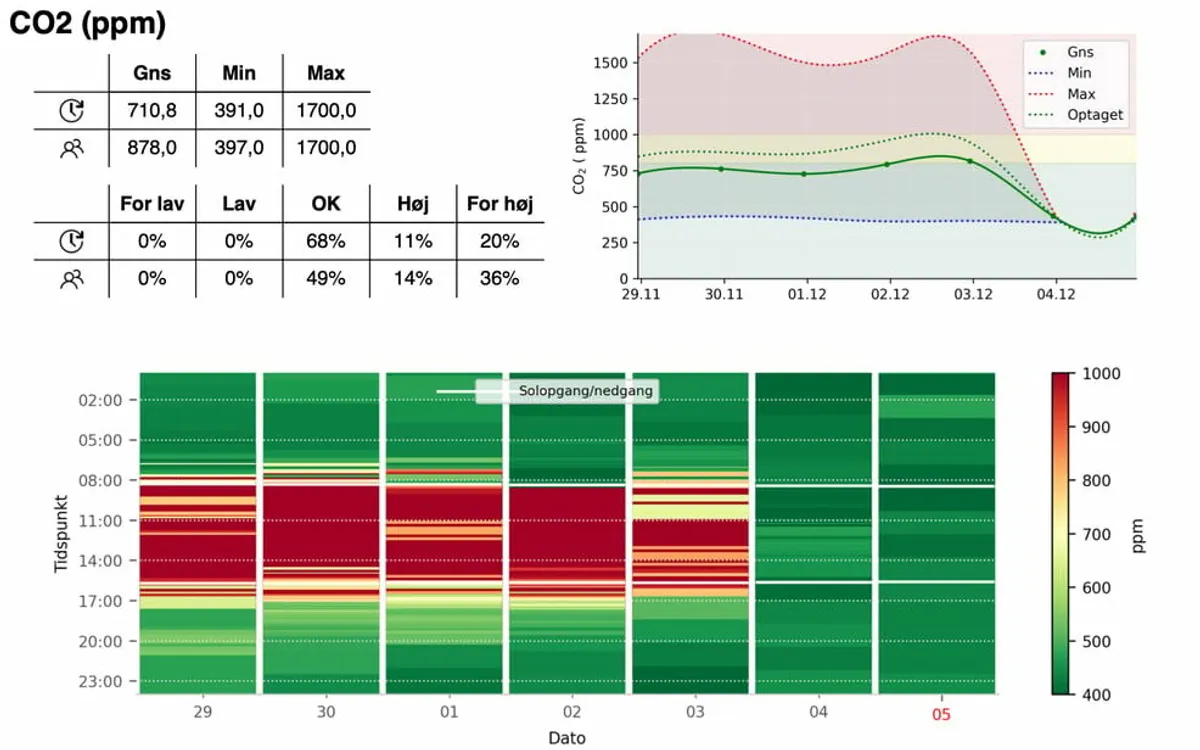
Daily, weekly and monthly indoor climate summaries land straight in your inbox. Choose exactly which values to include, send to as many recipients as you like, and always send a test first. The warning function notifies you the moment the indoor climate drifts from the level you have set. Tune alerts to avoid false alarms, choose SMS or email, and assign different reports to different recipients, so rising humidity or poor air quality is caught early.
Who it is for
Whether your reporting touches EPBD, DGNB, CSRD, ESG or local building rules, RoomAlyzer gives compliance officers and facility teams the same objective baseline to build on.
Smarter together
Pair indoor-climate data with occupancy from Space management — ventilate when rooms are in use and dial back when they are empty.

Book a demo. We'll show the platform, walk through your case and give you a price estimate.