
Smart notifications
Unlike a beeper-only sensor in an empty basement, RoomAlyzer sends the alarm directly to the people who can act — by SMS and email the moment water is detected.
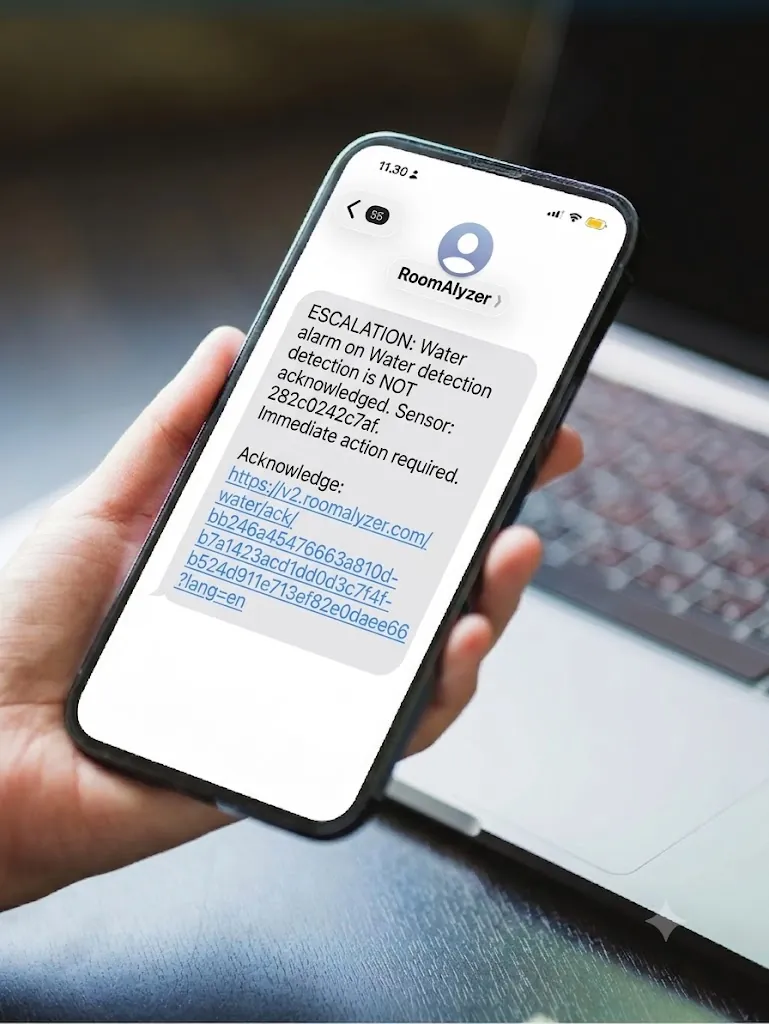
Forget old-fashioned alarms that no one hears — get direct SMS & email notifications, ensuring you catch leaks before they become a disaster.
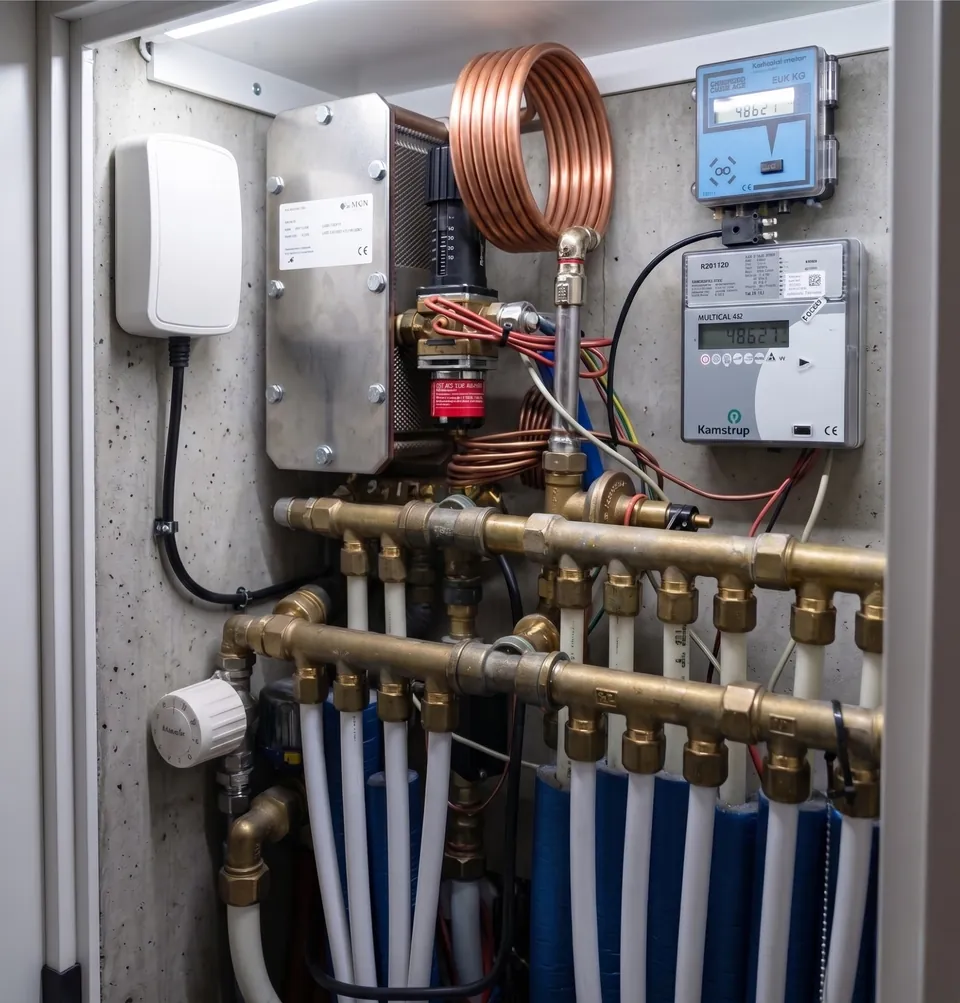
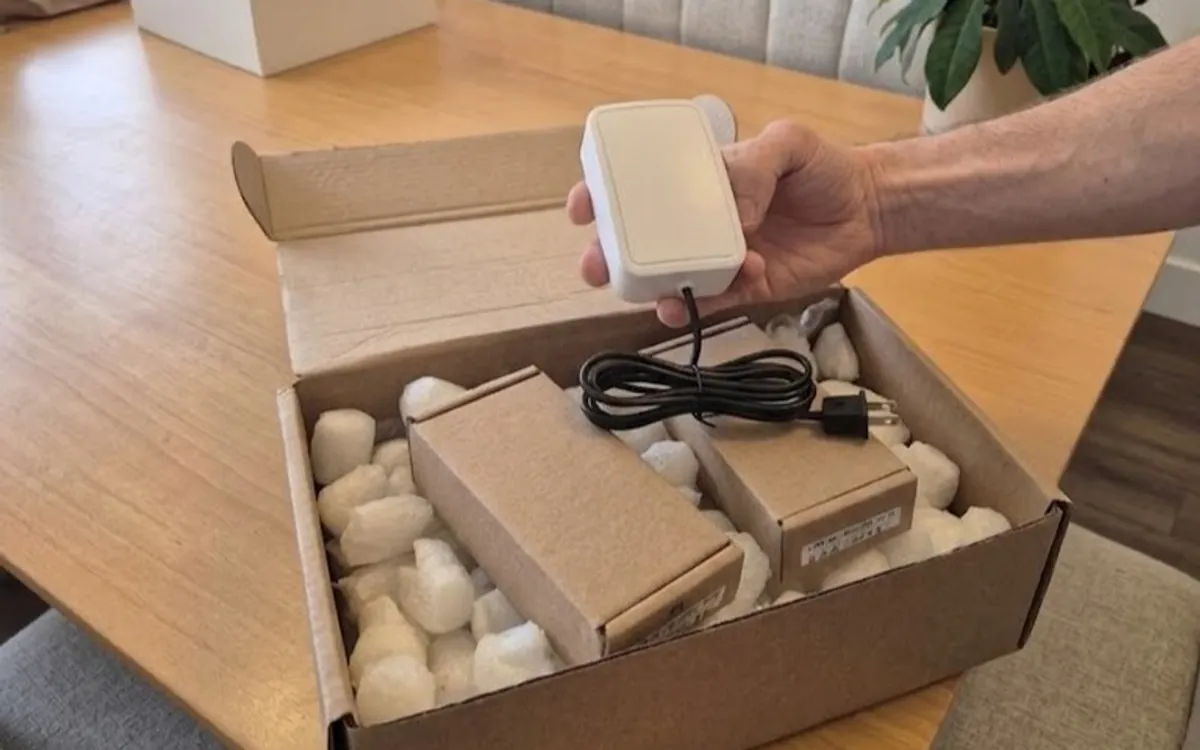
Compact (IP30)
For dry technical rooms, cabinets, and under sinks
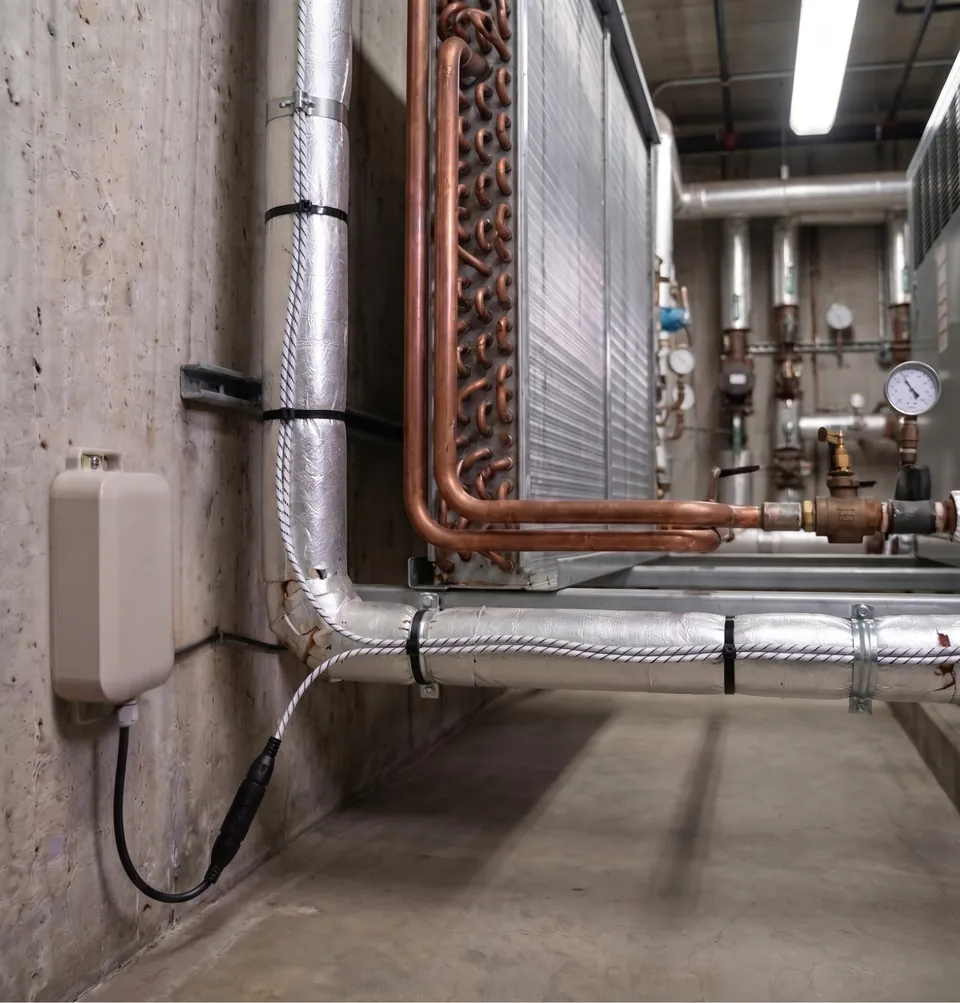
Pro (IP67 waterproof)
For basements, plant rooms, and shafts
Technical shafts: Where leaks often drip unseen down through several floors.
Heating plant rooms: Catch district-heating leaks and dripping pumps early.
Elevator shafts: Prevent sump water from damaging expensive lift equipment.
Communal laundry rooms: Behind industrial machines where pipes and hoses are rarely checked.
Anywhere you need certainty: Quick notification when unwanted water appears.

How RoomAlyzer protects
RoomAlyzer connects Water detector and Water rope sensors to give facility teams and housing associations instant alerts, reliable coverage in hard-to-reach spaces, and documentation that stands up in an insurance claim. See how to find a leak before the damage grows. Compare leak sensors
Unlike a beeper-only sensor in an empty basement, RoomAlyzer sends the alarm directly to the people who can act — by SMS and email the moment water is detected.
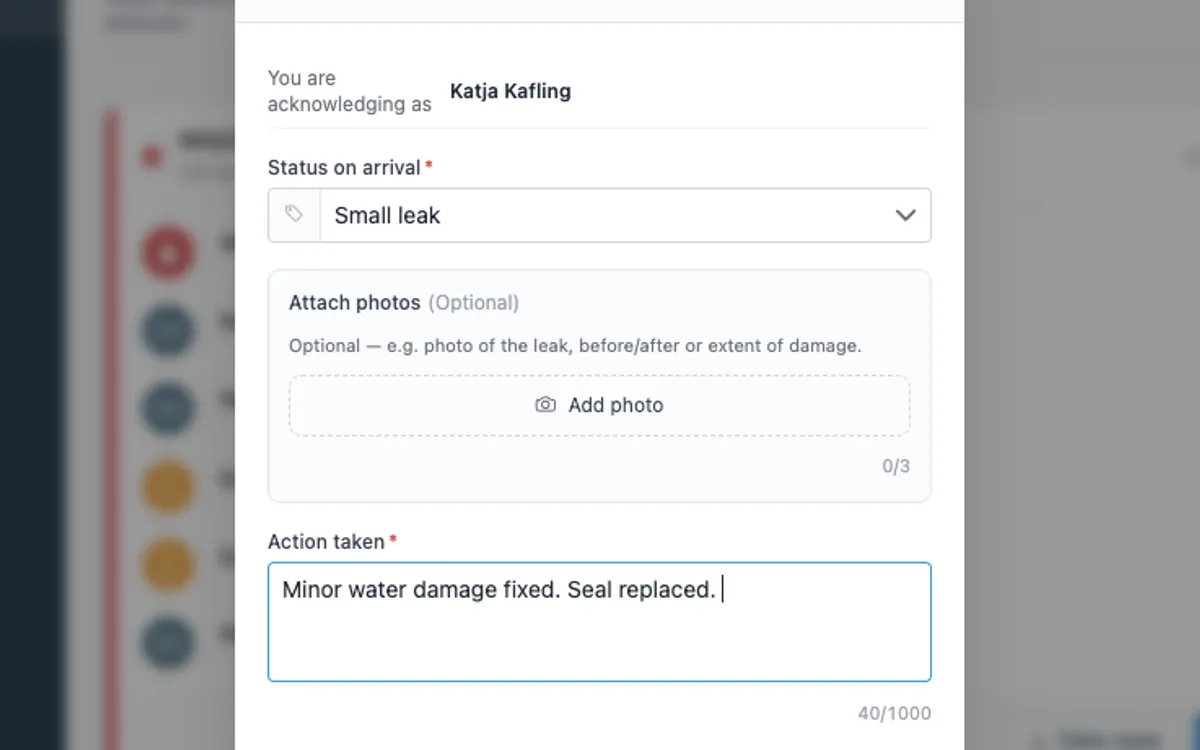
Define a call chain for each site. If the first person does not acknowledge the alarm, the system automatically notifies the next contact — so a leak at 2 a.m. does not wait for someone to check their phone later.
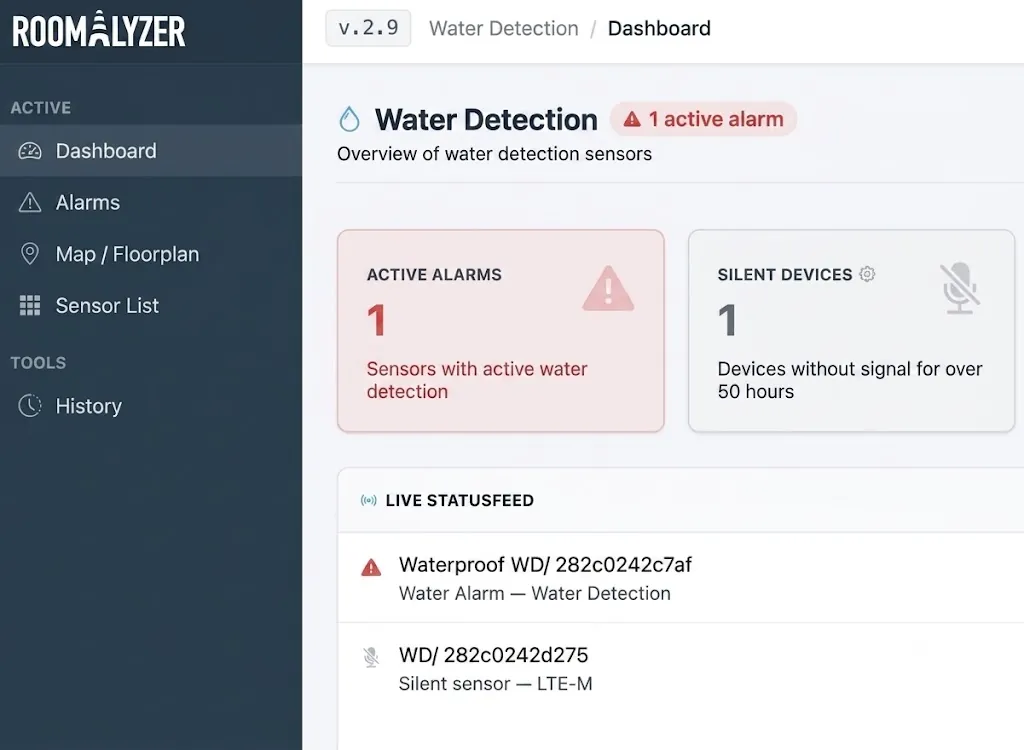
See exactly where the leak was detected — on maps and floor plans across your buildings, so the on-call team knows which room to head for before they arrive.
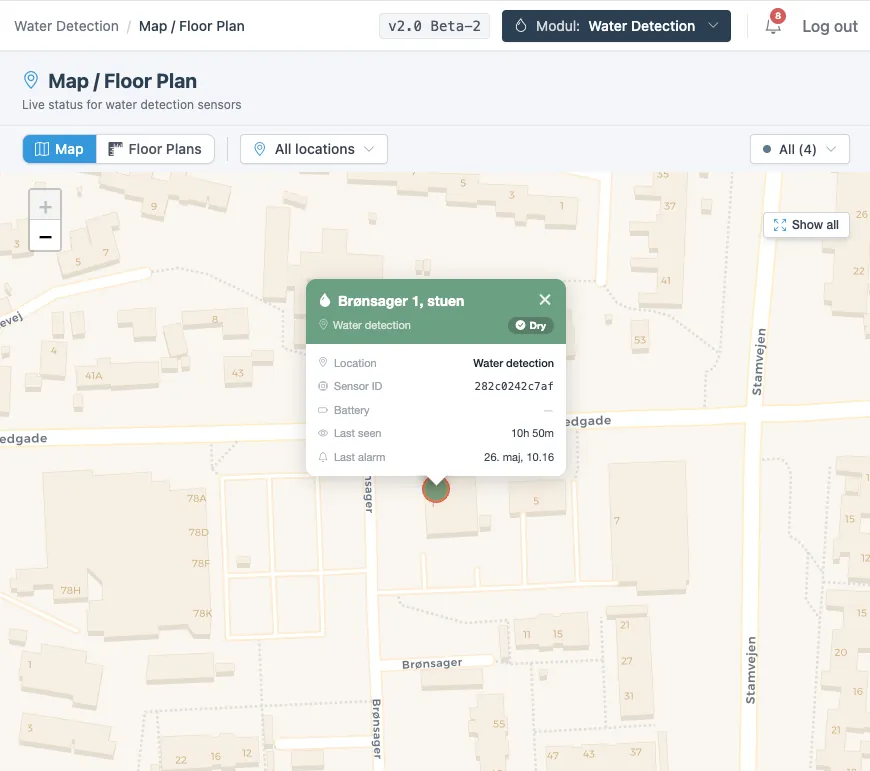
Every detection is timestamped and retained in the platform — giving you an objective record for insurance claims and post-incident review.
The risk you cannot hear
Water reaches servers, electrical installations, or the building fabric before anyone is aware — turning a minor incident into a major one.
A traditional sensor beeps to itself in a basement or shaft where no one is around to notice it.
Shafts, basements, and technical rooms are exactly where leaks start — and exactly where no one looks regularly.
Who it's for
The same alert that reaches a facility manager in a commercial building reaches the on-call caretaker in a housing association — with documentation everyone can trust.
Also relevant
Heritage buildings face a double risk: slow humidity damage to collections and sudden water ingress from roofs, pipes, and masonry. Pair water detection with Preservation to protect both the fabric and what it holds.

Book a demo. We will walk through your risk points, show the platform, and give you a price estimate.