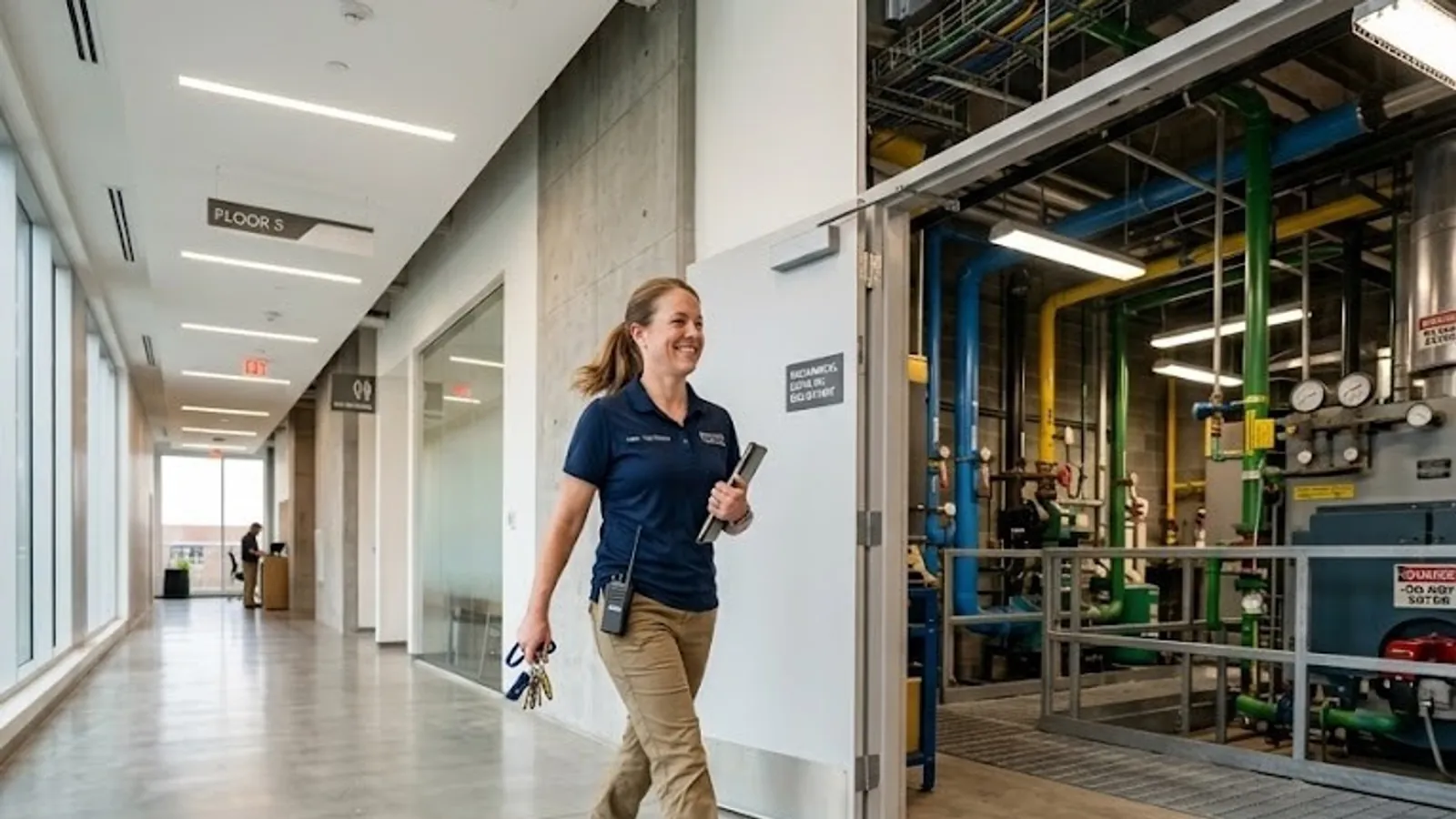
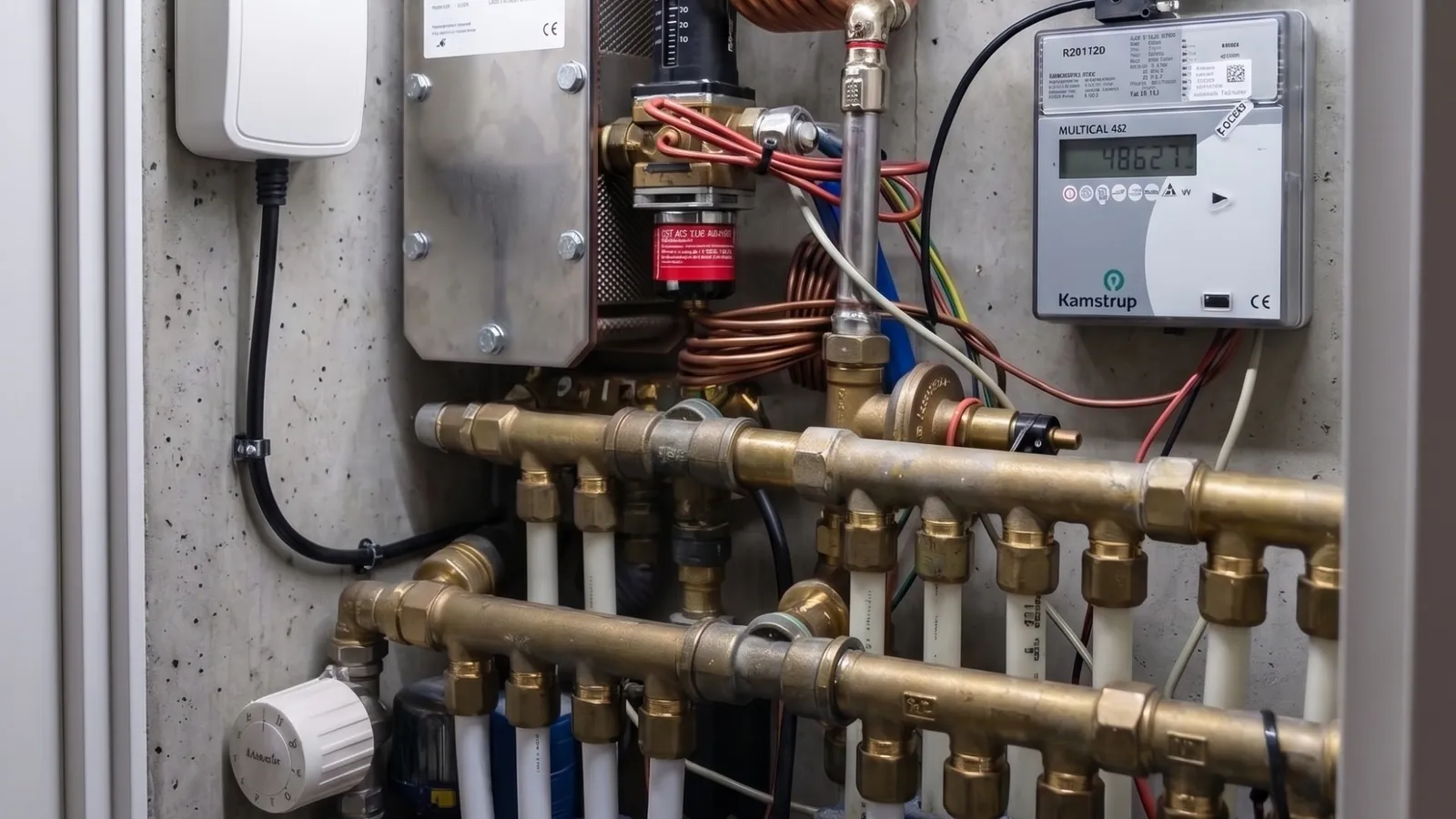
If you are responsible for one building or several — whatever the type — you know how galling it is to walk in on Monday morning and only then find the water damage that happened on the Friday.
That is exactly the kind of situation you can prevent with water detection, which consists of sensors on the floor in the places where water should never be. The sensors are connected to an alarm chain that reaches a human being and makes sure the right person is told as quickly as possible. The arithmetic is simple: the extent of the damage is roughly proportional to how long the water is allowed to run. Ten minutes is a floor cloth. Fifteen hours can mean flooring, plasterboard walls, furnishings, drying out, repairs and a mould risk that only shows up months later.
Why the expensive damage always happens at the same time
There is a pattern to water damage that every operations manager recognises. It is rarely discovered while it is happening.
A hose that goes at 10 pm on a Friday evening runs until Monday. A pipe in a plant room nobody enters can drip for weeks. A leaking valve down at crawl space level is found once the moisture has reached up into the structure. What they have in common is that nobody was there — and that the room it happened in is a room nobody visits daily.
That is also why the problem is easy to solve technically. You do not have to guess where the water is coming from. You just have to know that it is there, straight away.
Where the sensors should go
Water detectors measure one thing: whether there is contact with water. If you choose our solution, Water detection in RoomAlyzer Water, the system tells you the moment ion-bearing liquid is detected. The sensors work independently of your local Wi-Fi, so they suit deep basements, service shafts and enclosed electrical cabinets. They register an alarm signal and can sit somewhere nobody goes without becoming a maintenance problem.
Placement is where the whole craft lies, and the logic is the same as for a fire alarm: put them where the water collects, not where it comes from. Water runs downwards and finds the lowest point. So:
- Under washing machines, dishwashers, fridges and water heaters.
- In plant rooms, by pumps, valves and joints.
- By floor drains in basements and in below-ground rooms.
- At pipe penetrations and at the risers on every floor.
- In server rooms and other rooms where the consequences of water are out of all proportion to the leak.
Prioritise by what sits underneath. A drip in a plant room above an archive is a completely different problem from the same drip above a car park.
What it looks like day to day
Day to day, the best water detection system is the one you never think about. That is why the dashboard in RoomAlyzer Water is built as a picture of reassurance: active alarms at the top, and below them an overview of the sensors that are dry and the sensors that are silent.
Silent sensors are the most important and most overlooked part. A sensor that has not sent data for a while is not the same as a sensor reporting all clear — it may have a flat battery, or it may have been moved by a contractor. How many hours without data it takes before a sensor is marked silent is something you set yourselves under the thresholds, and there is a button, ‘Acknowledge all silent’, that clears them all in one go once you have looked at them.
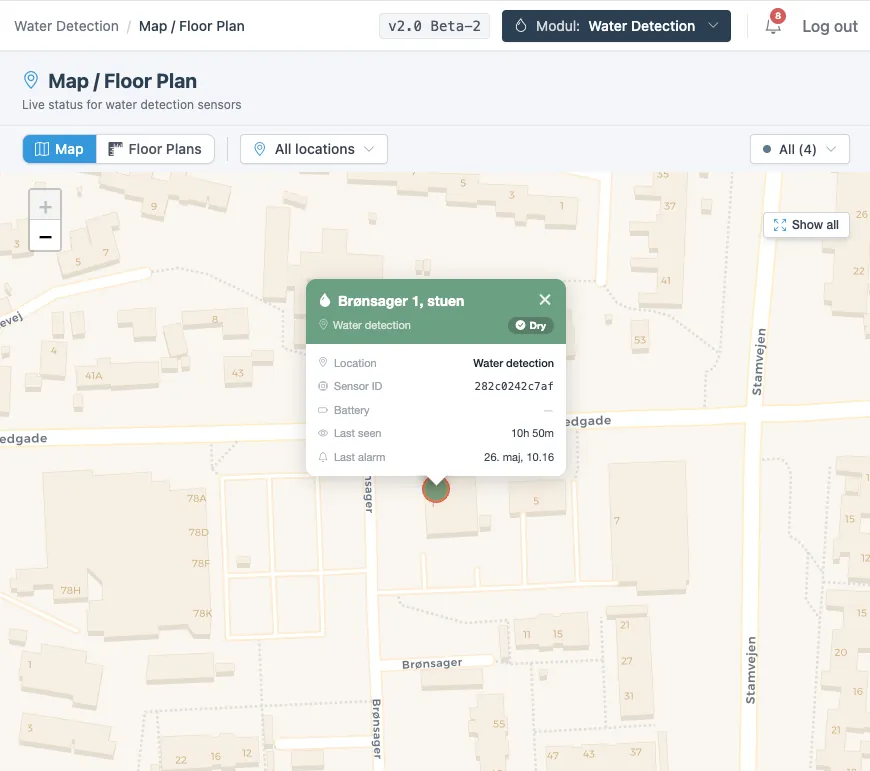
The map shows the sensors coloured by state: red for an active alarm, green for dry, grey for silent. It can be shown as a geographical map with aerial photography behind it, or as a floor plan where the sensors sit as dots on your own drawing. The selector lists only the plans that actually have a water detector placed on them, with the number beside the name — so you are not hunting for the right drawing in the middle of an alarm.
The sensor list shows every activated water sensor with status, battery and signal. It is the place to check, once a quarter, that the whole installation is still alive.
The live feed on the dashboard puts the location first, so you read the place before the event. If you rename or move a sensor under Administration, both the silent-sensor view and the signs of life update immediately — but an open alarm keeps the location and the name it was raised under. That is deliberate: the history should describe what the message actually said at the moment somebody was called.
The history is the part that pays for itself
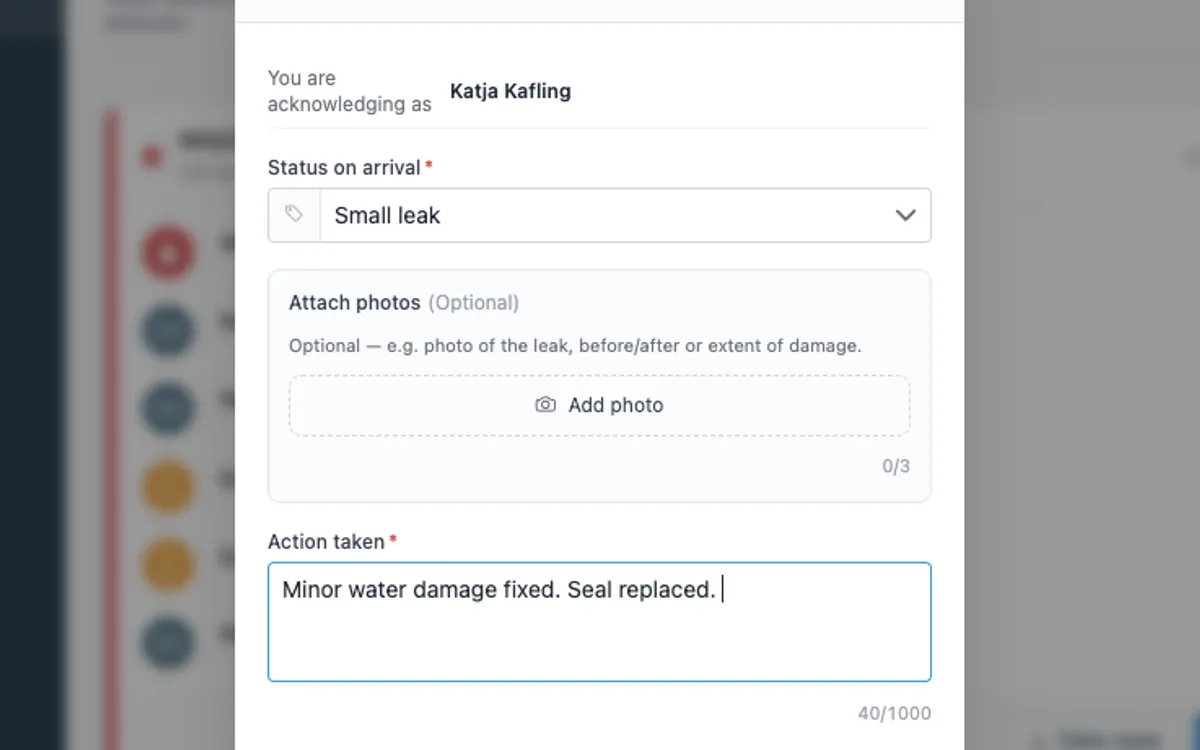
Every alarm is stored with the time, the sensor, the location, who took the job, when it was acknowledged, what was found and what response time that produced. The log can be filtered by period and exported to PDF or Excel.
That is useful in three situations that are all usually difficult. With an insurer, RoomAlyzer Water lets you document easily when the water was found and how quickly it was dealt with. With a board or an owner, you can show that there have been four incidents in the same basement in a single year — turning a repair into a decision rather than a request. And internally, you can see whether the response times are meeting the SLA (service level agreement) you have signed up to.
The alarm chain itself — recipient groups, escalation in stages, and acknowledgement straight from the message without logging in — is a subject of its own; it is described here.
What the system does not do
It does not turn the water off. There is no valve control in RoomAlyzer Water, and an alarm is a message to a human being, not an automatic intervention. If you want automatic shut-off, that is a separate installation.
Nor does it detect hidden moisture inside a structure. A detector responds to water it is in contact with — it cannot see a pipe seeping inside a wall. That is where the humidity readings and the mould calculation are the right tool, because they catch the slow, invisible version.
And finally: a sensor in the wrong place detects nothing at all. That is the most common reason a system does not work as intended — not the technology, but the placement. Fortunately, that is something we have a great deal of experience with.