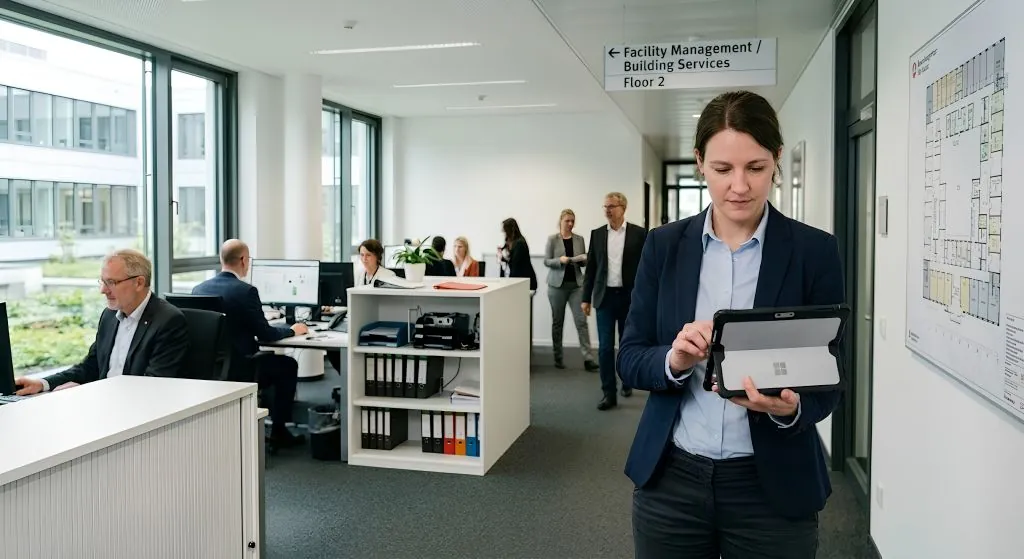
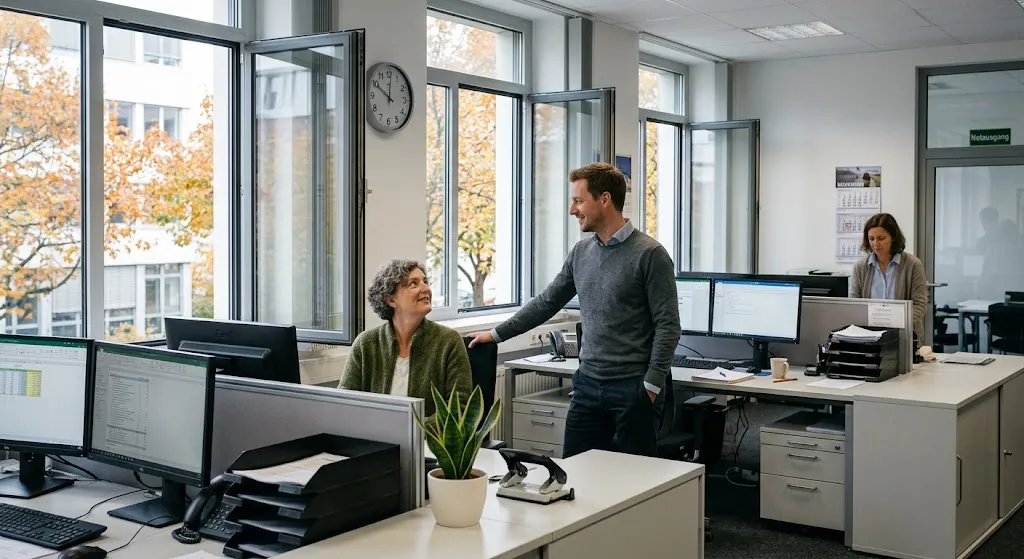
You may already have had the email saying it is impossible to work in the south-facing rooms, while senior management asks whether that is really true. If you look after building operations and indoor climate, it is a familiar position to be in.
Overheating is when the room temperature during occupied hours sits higher than the purpose of the room can reasonably tolerate — warmer, in practice, than sedentary work can be done in comfortably. The summer problem is rarely that one day was hot. It is that nobody can account for how many hours it lasted, in which rooms, and whether it happened on ordinary days or only during a heatwave. Without that answer the discussion becomes one claim against another, and the complaints about the indoor climate pile up in a way that is hard to answer.

Why the question usually stalls
Four things get in the way every time.
The complaints arrive when things are at their worst and fade when the weather turns. By then it is too late to measure. The thermometer on the windowsill stands in the sun and shows something other than the place where people actually sit. Everyone talks about different rooms as though they were one building. And finally, two questions get mixed together that each have their own answer: was the building built correctly, and is it too warm to work in right now?
The last one is worth keeping separate. The Building Regulations set requirements at construction and major refurbishment — Part O covers overheating in new residential buildings — and compliance is demonstrated by calculation before anyone moves in. For buildings without cooling, CIBSE TM52 and TM59 are the recognised overheating criteria. A perfectly compliant building can still have one room that is unpleasant once the sun has been on the façade since lunchtime. The two statements do not contradict each other — they simply answer different questions.
What actually applies in the workplace
What applies to sedentary work, and how the hot hours are gathered in a report, is in workplace temperature rules. The difference between an ordinary warm day and a heatwave decides whether the problem is the building or the weather, and therefore whether the answer is solar shading or a jug of water.
Turning the hot hours into documentation
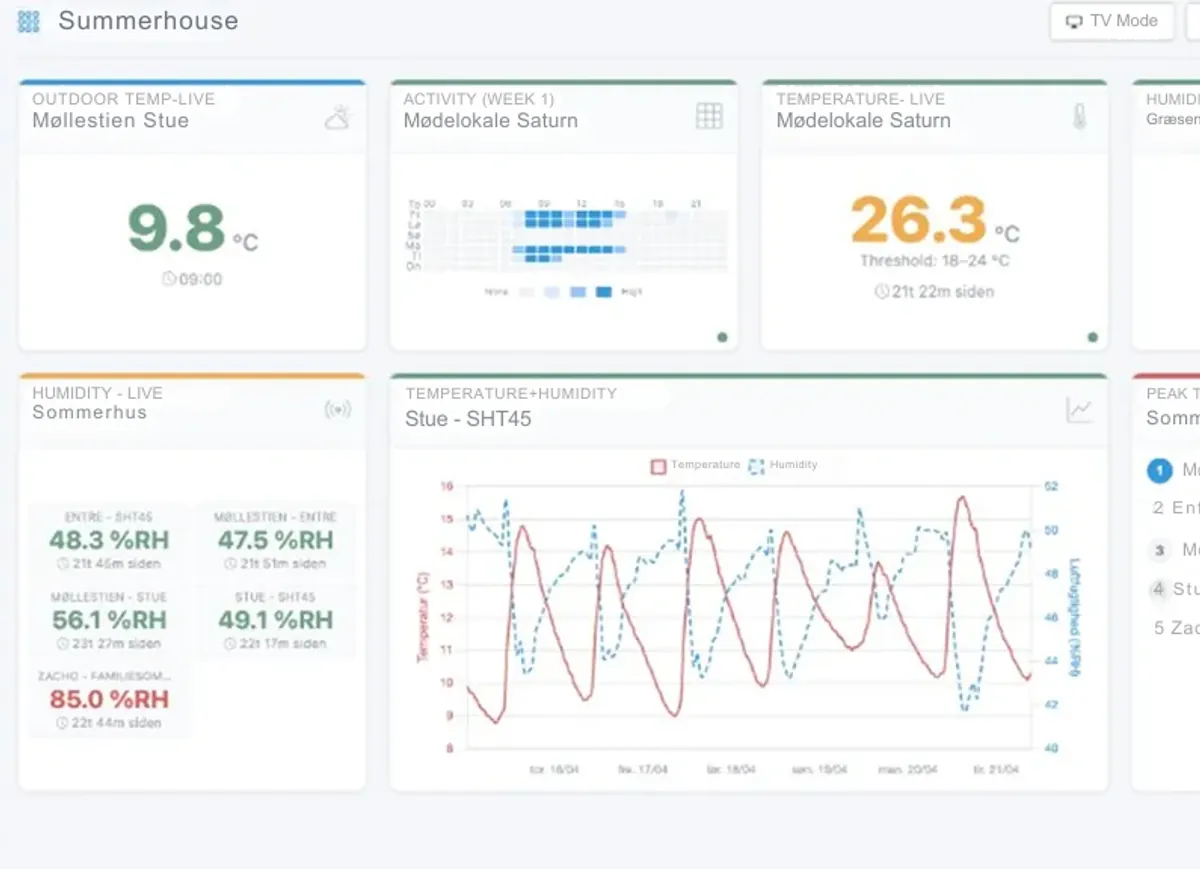
With our solution Indoor climate in RoomAlyzer Air you get data that lets you judge indoor climate complaints on a factual basis. The sensors measure around the clock, so the hot weeks are on record no matter when the question is raised. From there the accompanying software gives you three levels, depending on what you need.
-
The chart: Shows how a single room behaved, with the green, amber and red zones of the scenario drawn in. That is enough to settle whether the room peaked at 3 pm or sat high all day.
-
Deviations: Works through the whole building: how much of the time each room spent above the threshold, which rooms are worst, and through the 24-hour distribution when in the day it happens. This is where the pattern turns into a priority, because you can see it is the same five rooms every time.
The decisive trick is the outdoor source. The report takes the outdoor temperature from an Outdoor sensor or from weather data at the location’s map position, and uses it to separate an ordinary warm day from a heatwave. Without outdoor figures the hours are still counted, but nobody can tell which kind of exceedance it was.
What you can do once the pattern is clear
Once you know which rooms and which hours you are dealing with, the remedies become concrete and usually cheaper than feared: solar shading on the façade that is causing it, night ventilation that cools the building down before the day starts, moving the most exposed workstations, or shifting meeting times in the room that is warmest after lunch.
The measurement series carries on, and that is the second half of the benefit. Once the blinds are up, you can compare this summer with last summer for the same rooms and the same hours — and see whether it worked, instead of asking people whether they think it feels better.
One last honest note: the sensors are operational monitoring, not accredited measurement. A formal thermal comfort assessment sets requirements for measurement height and radiant shielding among other things, and where the sensors are placed is your responsibility. The report documents what was measured during occupied hours — it does not replace a professional health and safety assessment.
If you need the rules and the report in detail, the workplace temperature rules are set out here. And if it is the day-to-day threshold breaches you want a grip on, deviations are explained here.